Webinar Explores Regional Pathways for Women’s Participation in Mediation and Peacebuilding
HCD in collaboration with AP and MWARP hosted a regional webinar titled “Navigating Regional Peace Architectures: AU and IGAD Mechanisms for Women in Mediation and Peacebuilding.” Held on the margins of the African Union Summit, the event brought together peace practitioners, regional experts, and partner organizations to discuss practical ways to strengthen women’s engagement in regional peace and mediation processes in the Horn of Africa.
The webinar forms part of a three-part series under HCD’s project “Promoting the Participation of Women in Mediation Processes in the Horn of Africa.” The discussion focused on identifying practical entry points within regional institutions, particularly the African Union (AU) and the Intergovernmental Authority on Development (IGAD), to enhance women’s participation in peace and security processes.
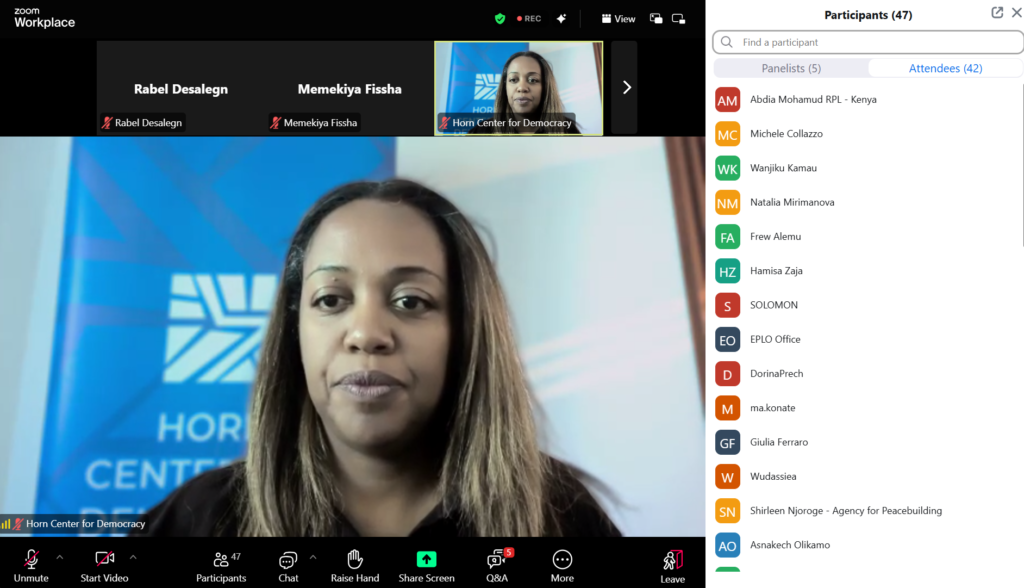
Opening the session, Yemisrach Kebede, Program and Partnerships Director at HCD, emphasized the importance of translating the Women, Peace, and Security (WPS) agenda into practical action. She highlighted that meaningful participation of women significantly strengthens peace processes, yet women remain underrepresented in formal mediation and negotiation spaces globally.
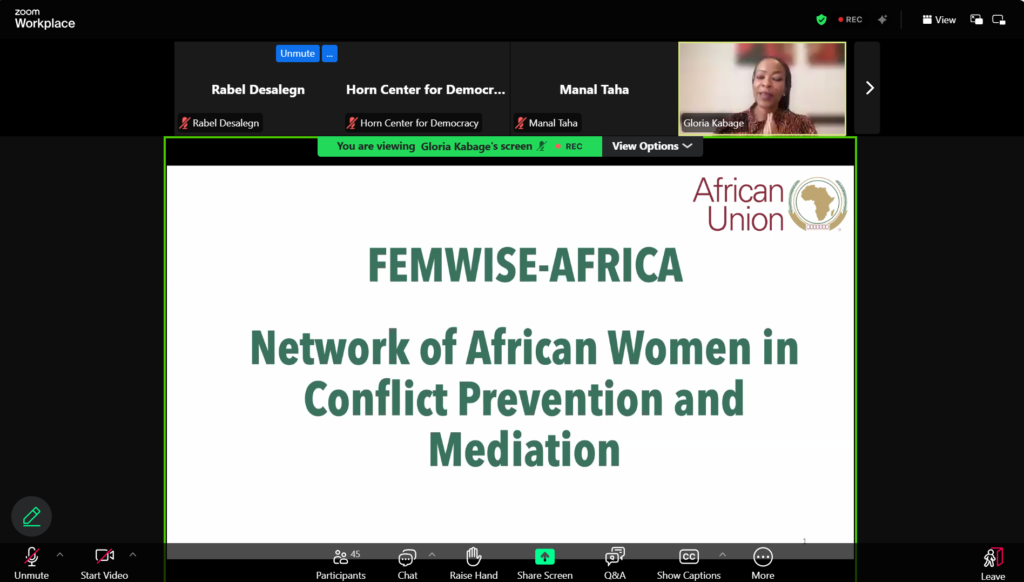
Speakers from regional institutions shared insights into existing frameworks and initiatives that support women mediators. Gloria Kabaga from the African Union Commission discussed the role of the FEMWISE-Africa network, which works to strengthen women’s roles in mediation, preventive diplomacy, and dialogue across the continent. The network provides capacity-building opportunities, supports knowledge exchange among women mediators, and facilitates engagement with formal peace processes.
Representing the Intergovernmental Authority on Development, Moges Ali highlighted regional efforts to integrate the WPS agenda into IGAD’s peace and security architecture. Initiatives such as the IGAD Women Mediators Network, regional policy frameworks, and gender-sensitive early warning mechanisms aim to strengthen women’s participation in conflict prevention and mediation across member states.
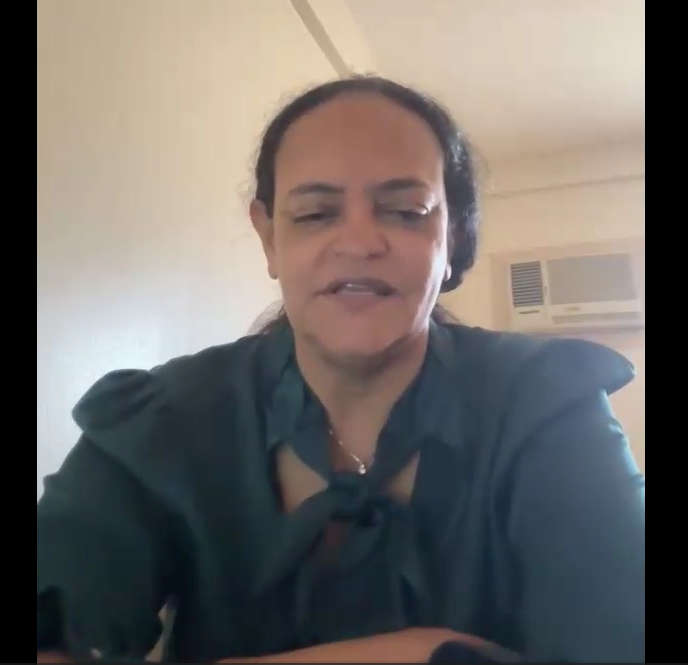
The discussion also featured perspectives from practitioners working in conflict contexts. Sudanese peacebuilding expert Manal Taha reflected on the challenges women face in accessing formal negotiation platforms, despite their significant contributions to community-level peacebuilding in Sudan and South Sudan.
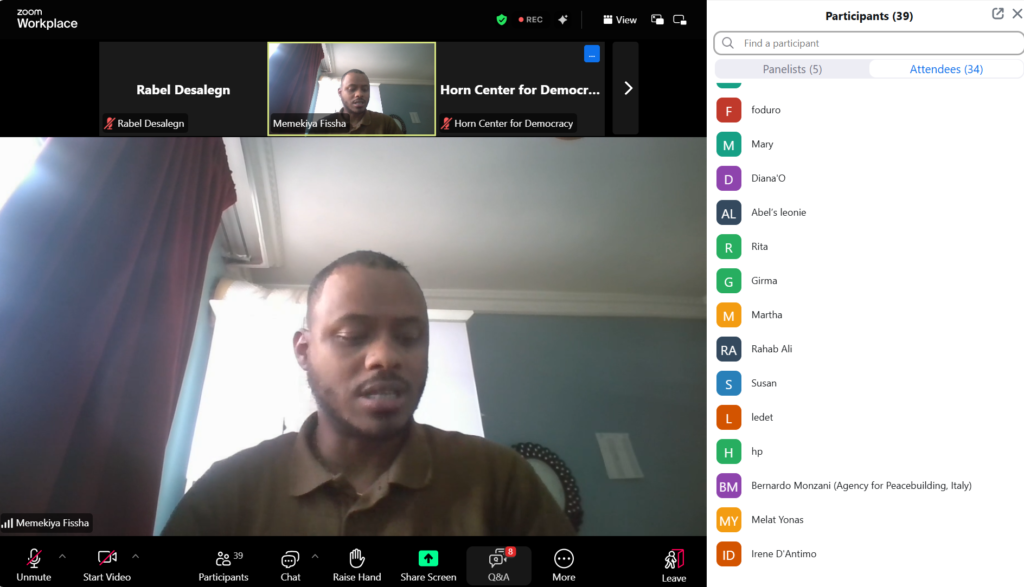
From a partner perspective, Memekiya Fissha of Search for Common Ground highlighted the importance of coalition-building, advocacy networks, and capacity strengthening to support women’s effective engagement in peace processes.
The webinar concluded with a call for stronger collaboration between grassroots women leaders, regional organizations, and civil society actors to ensure women’s voices are represented in mediation and peacebuilding efforts. Participants emphasized that while regional frameworks provide important institutional entry points, sustained advocacy; strategic engagement accountability are necessary to translate these commitments into meaningful participation.
HCD announced that the third webinar in the series will take place in April 2026, focusing on real-time political and conflict dynamics in Sudan and South Sudan, and exploring further opportunities for women’s engagement in regional peace processes.