
Country Program
Ethiopia
Program Overview
The program is informed by HCD’s understanding of democracy as articulated in the African Charter on Democracy, Elections and Governance (ACDEG), which goes beyond electoral processes to include the promotion of democratic principles and practices, as well as the consolidation of a culture of democracy, peace, and security. Accordingly, HCD’s program pillars encompass human rights, civic participation, civil society and media, and peace and security, recognizing these as interdependent foundations of sustainable democratization.
As part of mainstreaming peacebuilding within democratization processes, HCD supports national transitions and works to ensure meaningful citizen participation in these processes. The program places particular emphasis on strengthening citizen engagement including women and the youth, civil society and media, and on convening inclusive platforms that enable communities to contribute to democratic governance and peacebuilding efforts.
Transitional justice is recognized within the program as a critical democratic governance tool that contributes to democratization by addressing past injustices that undermine democratic values, social cohesion, and public trust in institutions. Within this broader framework, the Ethiopia (ETH) Program aims to contribute to the country’s democratization process including by supporting the implementation of transitional justice as an entry point for advancing democratic principles, peace, and citizen participation.
Program Objectives
To promote democratic principles and practices in Ethiopia, including active citizen participation in democratic processes and institutions, and through civil society and media, as core pillars of a sustainable democratization process.
To contribute to peace and security as a foundation for democratic dispensation and to support the implementation of transitional justice as a democratic governance tool, recognizing it as a key mechanism for rebuilding trust in state institutions and foster social cohesion.
To strengthen citizen engagement in national transition processes, ensuring that communities; particularly victims of conflict and human rights violations; are informed, organized, and able to influence the peace building and broader democratization efforts through localized, inclusive, and victim-centered approaches.
Our Work
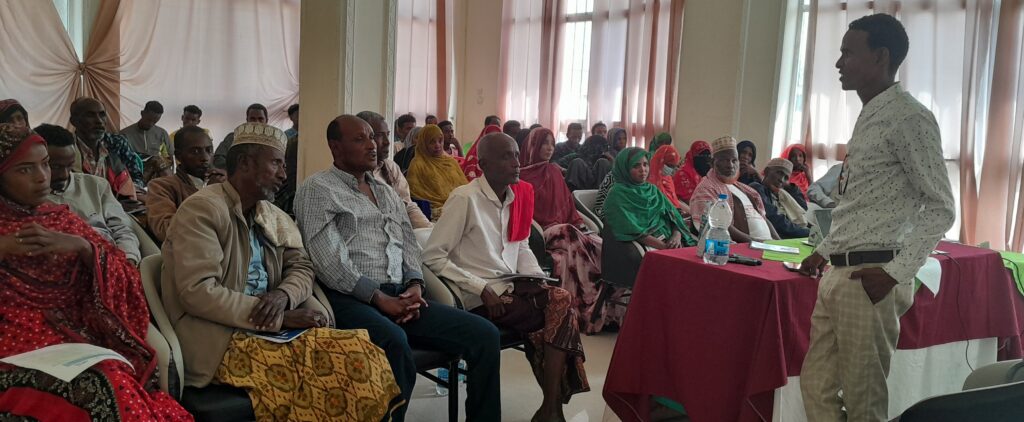
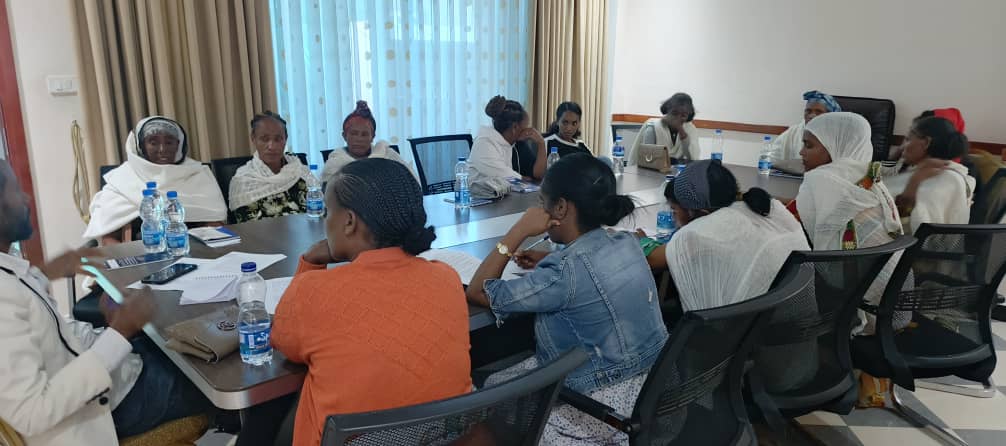
Between February and July 2025, HCD completed the field-level components of a project in Afar and Tigray as part of its role as a founding member of the TJC-E Consortium. https://tjc-ethiopia.org/
The project delivered the development of training resources on TJ in local language, including brochures and PPTs; and facilitating a training consultative workshop in Afar and Tigray. HCD developed partnerships with the Afar War Victims Relief Society and the Tigray Association of Victims of War, as well as extended relations with the Universities in these regions for a fruitful localization of knowledge on TJ. This project also introduced the victims’ advisory groups for sustained victim engagement in transitional justice mechanisms. These groups will serve as a bridge between victims, associations, CSOs, and national TJ processes.