

Reimaging Democracy: Beyond Winners and Losers
This piece is published under the platform of HCD’s Horn Policy Reference Group, established to catalyze policy conversation on pertinent regional issues by renowned experts from the HoA.
Legitimate government is arguably an enduring public aspiration. Democracy has come to represent the quintessential, if not the sole, source of legitimate governance. Indeed, even countries that many may characterise as “authoritarian” or “non-democracies” often describe themselves as democratic and popular.
The essences of democracy are voice and inclusion as foundations for operationalising the idea of popular self-government. Institutional design for democratic self-governance often seeks to advance distinct but inter-related goals, namely: representative and deliberative legislative bodies; stable and effective executive; responsive governance; and (electoral) accountability. These goals are complementary, but also in tension, demanding institutional trade-offs.
Institutional designs for democratic self-governance are complementary, but also in tension, demanding institutional trade-offs.
Legislatures, which tend to be largely elected, are often seen as the premium platforms for representation and deliberation. In pursuit of representation and deliberation, in countries with genuinely competitive politics and relatively free and fair elections, legislatures tend to be inclusive of various political forces.
In contrast, in pursuit of stable and effective government, constitutional arrangements tend to establish cabinets/executives that are exclusively controlled by one or a few parties in a coalition. In presidential systems, the president often has exclusive control over the cabinet, while in parliamentary systems, the party or coalition of parties with majority parliamentary seats exclusively dominates the cabinet. Semi-presidential systems offer some control over the executive to the majority party/coalition in the legislature, alongside the president.
Responsive governance mainly relates to what happens between elections, such that government policies and their implementation must seek to identify and respond to popular preferences – necessitating continuous public participation between elections. In competitive political systems, a lack of responsiveness can result in electoral accountability, with incumbents losing office at the ballot box.
Responsive governance seeks to identify and respond to popular preferences.
Majoritarian Hegemony
In practice, even in countries with free, fair and competitive elections, democratic systems are characterised by institutional features that seek to winnow winners from losers in each electoral cycle, especially in controlling executive power. In constituting arguably the most consequential government branch – the executive – the pursuit of stability and effectiveness above all else have led to winner-takes-all political systems. Representative democracy has effectively morphed into majoritarian democracy.
To the extent such exclusive majoritarian power is loathed, constitutional frameworks mainly seek to establish formal checks and balances, in the form of supposed legislative and judicial checks on the executive dominated by a single political group or coalition. Many countries also seek to divide executive power vertically through federalism and related arrangements. Nevertheless, even here, executive power at both the central and subnational levels is often exclusively dominated by one party or coalition. Even in consociational systems organised around a grand coalition government, the emphasis is on inclusion of those with majority support from each pre-determined identity groups.
Majoritarianism in the executive was not always the norm. Ancient Athenians divided executive power among several office holders, who exercised power collectively. In Sparta, executive power was collegially exercised among hereditary kings and annually elected leaders. The Roman republic was governed under two consuls with equal power. And the Constitution of the United States, the first modern constitutional framework, originally established a system where the person with the highest support of the electoral college became president while the one with the second highest support became vice president. In first decades of democratic rule in the United Kingdom, executive power was broadly shared among influential forces within parliament.
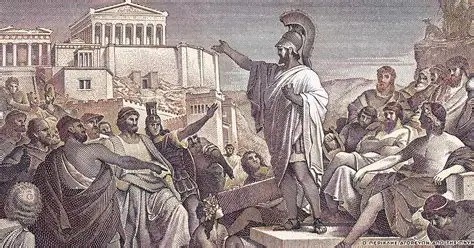
With the emergence of organised political parties, the United States amended the constitution to effectively leave the executive in the exclusive hands of the winning candidate and his party, while in the United Kingdom, single parties started to dominate the executive.
Majoritarianism, mainly developed as a decision rule for cases where broad consensus is unattainable, has been transformed into a mechanism that determines who alone gets to occupy the executive decision-making table.
Beyond Winners and Losers
The majoritarian transmutation of representative democracy is increasingly facing a crisis, with polarisation ascending and public trust in democratic institutions and broadly politics dwindling. Ideological differences among political parties are also increasingly blurred. In many places, the winner-takes-all nature of the political system has generated political apathy and even instability and conflict.
The winner-takes-all nature of the political system has generated political apathy and even instability and conflict.
Amid this, there is growing criticism of majoritarian systems as reflecting an impoverished understanding of democracy – one that conflates the majority, a part of the people, with democracy itself, which concerns the people as a whole. Proposals to eschew winner-takes-all, majoritarian democracy, particularly in the African context where political divisions tend to follow identity/regional lines rather than class and ideology, have been made since the wave of independence in Africa.
As early as in 1965, Arthur Lewis called for the the banishment of “winning” and “losing” as political vocabularies in heterogeneous nations, and instead called for inclusive “coalitions” that deliberately seek to include in the executive/government representatives from across regions and identity groups. His ideas were further developed through Arend Lijphart’s proposal for a consociational democracy, whose central aspect relates to a “grand coalition government” including representatives from all significant predetermined identity groups. Scholars such as John McGarry and Brendan O’Leary have also proposed a liberal version of consociationalism for plural societies which would be characterized by the representation of all political parties with notable public support in the executive. These liberal imaginations seek to do away with the concretization of predetermined identities, and instead allowing individual voters to decide, if at all, on the identities they would like to emphasize in each electoral cycle. Despite these early warnings, nearly all African countries, including those in the Horn, have adopted majoritarian systems of government. Their democratic shortcomings are particularly pronounced in deeply divided societies, such as in the Horn of Africa, where the absence of robust checks and balances can – reinforce electoral autocracy.
A political system that gives full executive power to a fraction of the political force/s is inherently undemocratic, whether or not the country may be described as divided. In a sense, all countries are formed of plural societies – whether based on identity, ideas, interests and passions – and a majoritarian system unjustifiably leaves a significant segment of the population without effective political representation, even when there are regular alternations of power between various parties. Democracy requires continuous inclusion in government of all significant political forces. In addition to enhancing the legitimacy of government, the continuous presence of diverse political and social groups in the government/cabinet can enable relative policy continuity – with adaptation, and avoid undue, frequent and dramatic swings after each electoral turnover, and abandonment of projects initiated by “former” ruling parties.
A political system that gives full executive power to a fraction of the political force/s is inherently undemocratic.
A recent example from Ghana provides a useful example in pursuit of inclusive governance, and nuancing of winners and losers. Before the December 2024 elections, the National Assembly amended the Standing Orders of Parliament to ensure that opposition party members would lead key parliamentary committees. Members of the then ruling party were unhappy and pushed against it, but insistence from the Speaker – who is a neutral selected from outside of Parliament – led to its adoption. Fast forward to December 2024, the opposition party won more than two thirds of the parliamentary seats and the presidency. As the new opposition, the former ruling party became the first beneficiary of the amendments, allowing it to lead key parliamentary committees. While this change falls short of the inclusive cabinet discussed above, it shows the various possibilities to empower and include the opposition in governance. In the absence of such legal and constitutional entitlements, attempts by a ruling party to include the opposition in cabinet or parliamentary committee leadership would merely open channels of cooptation, that weaken and divide opposition parties – in the process undermining political pluralism and increasing the chances of civic and armed resistance as principal forms of opposition.
In an attempt to promote both stable government and inclusive governance, some scholars have suggested a “semi-parliamentary” system. Rather than directly including the opposition in the cabinet, this system would require the establishment of a bicameral legislature. One legislature would be organized to form and dismiss the government, such that one party or coalition can maintain relative government stability. The second chamber would be deliberately organized to be diverse and not-dominated by any single party. This chamber would be empowered to co-participate in policy making, forcing the ruling party/coalition in the first chamber to deliberate with a diverse set of political forces and adopt negotiated policies. The exclusion of the second chamber from government formation and dismissal ensures that it does not undermine stability, while participation in policy making enhances deliberation and inclusion. In essence, proposals for a semi-parliamentary system seek upgrade current forms of representative democracy that remain heavily majoritarian and party based.
It is also possible to include more radical proposals to tackle majoritarian, winner-takes-all systems. One idea is to select members of parliament through sortition (lottery) from a pool of qualified citizens – drawing on ancient Athenian practices. Notably, in semi-parliamentary or otherwise bicameral systems, the second chamber could be selected through sortition, rather than on party lines.
In the African context, as well, some have emphasized the importance of broad consensus as the foundation of legitimate government, and that achieving it requires a non-party elections. A more refined debate is occurring in Ghana whereby elections other than the presidency and the National Assembly (such as for mayors, and regional/local assemblies) should not involve political parties. The concern is that the involvement of parties would nationalize discourses that should be focused on solving local and regional issues. There are also fringe suggestions that party politics should be limited to the National Assembly, while parties are excluded from fielding or supporting presidential candidates.
Concluding remarks
Representative democracy, as practiced across the world and particularly in the Horn of Africa, is decidedly majoritarian and winner-takes-all. Even in places where political control of the economic, social and cultural life of the people is limited, this is leading to polarization and a sense of crisis. In countries where state-party are indistinguishable, winning and losing make politics a do-or-die affair, often leading to tension and even instability and conflict.
Reimaging democracy requires distinguishing it from majoritarianism and retiring the winning-losing discourse, and instead focusing on shared/relative winning and continuous inclusion in governance. Once this paradigm shift occurs, it is possible to imagine institutional designs that can seek to achieve it, from inclusion of all significant political forces in the executive, to semi-parliamentarism to no-party systems and sortition.
Reimaging democracy requires retiring the winning-losing discourse, focusing on shared/relative winning and continuous inclusion in governance.
Reimagining democracy as proposed here won’t be a magic wand that would solve all problems; but without it, extant ills associated with majoritarian democracy will continue and will likely be exacerbated.
Related Content
Towards Democratic Hybridity in the Horn of Africa
Towards Democratic Hybridity in the Horn of Africa This piece is published under the platform of HCD’s Horn Policy Reference...
The Role of Civil Political Actors in Shaping the Outcome of the War and Charting the Post War Democratization in Sudan
The Role of Civil Political Actors in Shaping the Outcome of the War and Charting the Post War Democratization in...
Reimaging Democracy: Beyond Winners and Losers
Reimaging Democracy: Beyond Winners and Losers This piece is published under the platform of HCD’s Horn Policy Reference Group, established...
The Horn of Africa and the US-Israel-Iran War: An Opportunity for a Strategic Reset?
The Horn of Africa and the US-Israel-Iran War: An Opportunity for a Strategic Reset? This piece is published under the...
Sudan’s War as a Turning Point: The Decline of Military Power and the Reordering of State–Society Relations
Sudan’s War as a Turning Point: The Decline of Military Power and the Reordering of State–Society Relations The military, specifically...
Geopolitics in Motion: External Interventions in the Horn of Africa and the Escalation of Conflict in Sudan
Geopolitics in Motion: External Interventions in the Horn of Africa (HoA) and the Escalation of Conflict in Sudan The Horn...
Published on 21, July 2026 in Horn Prospects
Authored By: Dr. Adem Kassie, Vice President of the African Network of Constitutional Lawyers.
Share this: