
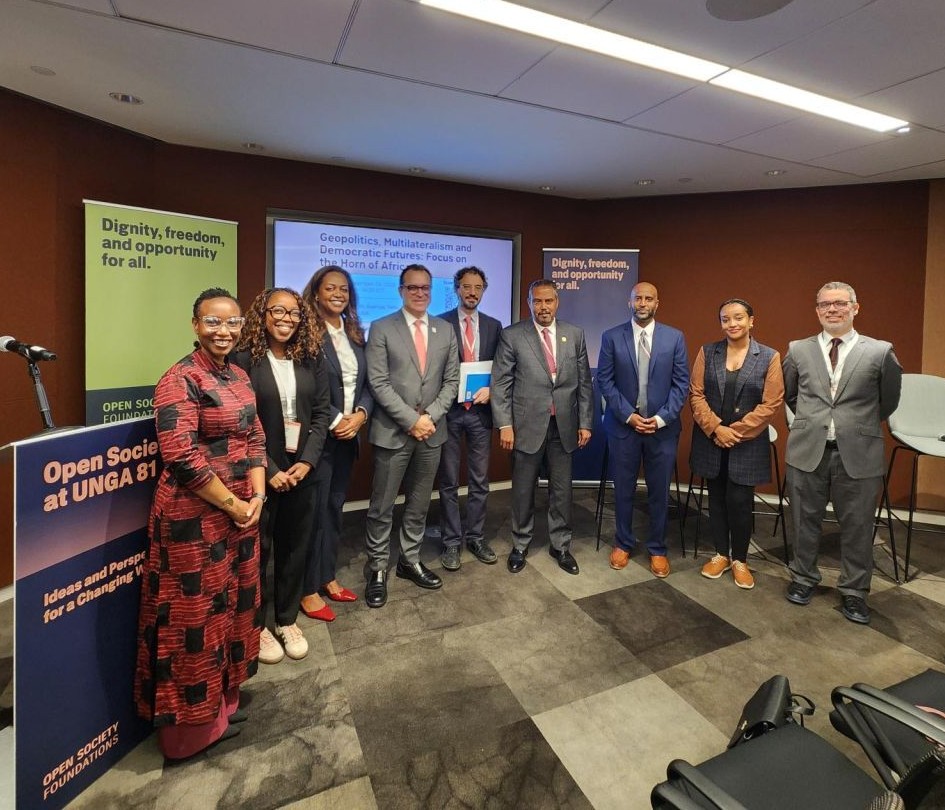
HCD Convenes High-Level Dialogue at UNGA81 on Geopolitics, Multilateralism, and Democratic Futures in the Horn of Africa
New York, 24 September 2026-The Horn Center for Democracy (HCD), in partnership with International IDEA and Open Society-Africa, convened a high-level side event on Geopolitics, Multilateralism, and Democratic Futures: Implications and Evidence from the Horn of Africa on the margins of the 81st Session of the United Nations General Assembly (UNGA81) in New York.
The dialogue brought together regional and international experts, policymakers, and stakeholders to examine how shifting geopolitical interests, evolving conflict dynamics, and changing patterns of multilateral engagement are shaping prospects for peace, democratic governance, and regional stability in the Horn of Africa (HoA).
The panel featured: Michael Woldemariam, Associate Professor at the University of Maryland School of Public Policy, Senior Fellow at the Center for International and Security Studies at Maryland, and Member of HCD’s Horn Policy Reference Group (HPRG); Bitania Tadesse, Policy Specialist for Africa at the International Peace Institute (IPI); and Commander Abebe Muluneh Beyene, representing the Intergovernmental Authority on Development (IGAD). The session was moderated by Zaid Al-Ali, Senior Programme Manager for Constitution-Building in the Africa and West Asia region at International IDEA.
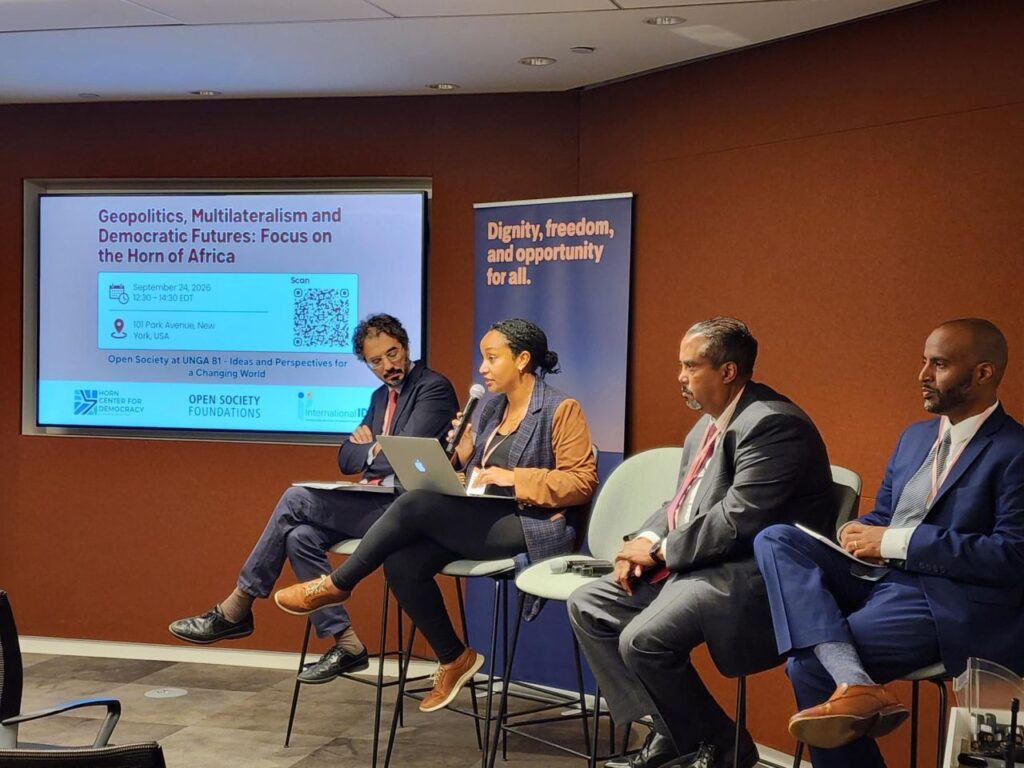
The discussions highlighted the growing strategic significance of the HoA, particularly its position along the Red Sea and its proximity to the Middle East, amid intensifying geopolitical competition and changing international security priorities. Panelists examined how external geopolitical interests, increasingly transactional foreign policy engagements, and the militarization of the Red Sea intersect with domestic political and governance challenges across the region.
A central theme emerging from the discussion was the increasingly interconnected nature of geopolitics, conflict, and democratization. These are not separate processes; external geopolitical rivalries interact with existing political tensions, institutional weaknesses, and democratic deficits, with significant implications for peace and security. The discussion also highlighted the constraints facing regional institutions and multilateral mechanisms in responding to increasingly complex and interconnected challenges.
The dialogue further explored the implications of the evolving global order for multilateralism and the roles of regional and international institutions, including the United Nations, the African Union, and IGAD. Participants reflected on the need for stronger regional responses and more effective multilateral engagement that recognizes the political realities, agency, and priorities of countries and communities across the HoA.
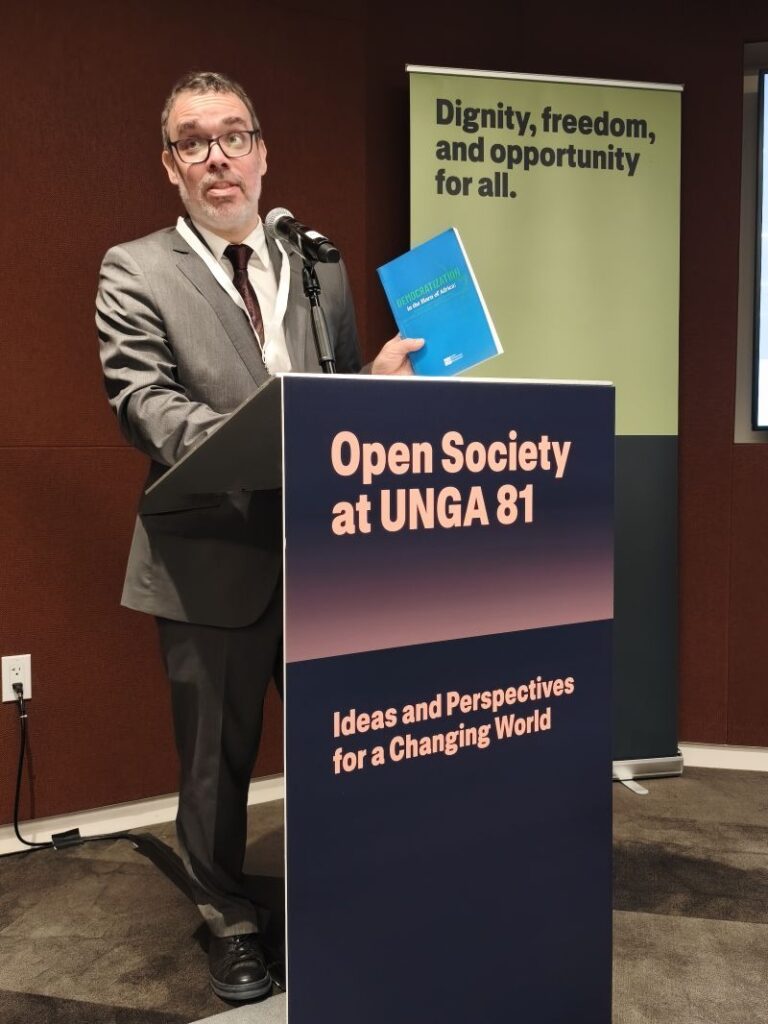
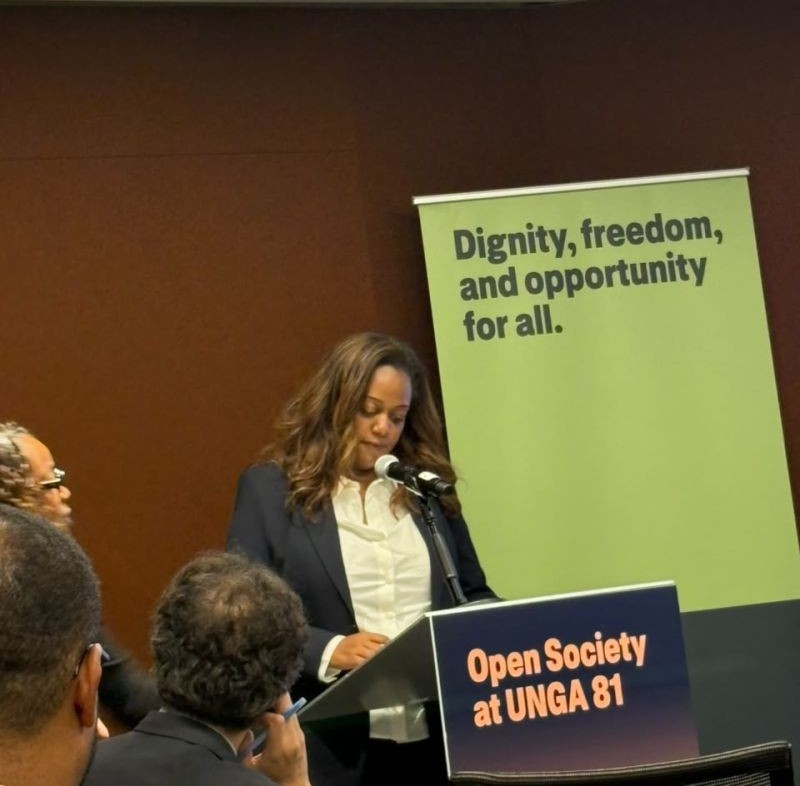
The importance of centering African agency and democratic legitimacy in shaping the region’s future also featured in the dialogue. In her closing remarks, Yemisrach Kebede, HCD’s Program and Partnerships Director, emphasized that young leaders, civic activists, and scholars across the HoA should not be passive victims of geopolitical rivalries, but rather recognized as driving forces behind regional resilience. She underscored that multilateralism cannot be rebuilt from the top down alone; it must also be renewed from the ground up through stronger regional engagement and a rebalancing of the relationship between the state and the citizen. By grounding African agency in democratic legitimacy and civic strength, the region can contribute not only to its own peace and stability but also to a more just and balanced global order.
For HCD, the dialogue forms part of its ongoing commitment to generating policy-relevant research, facilitating regional and international dialogue, and bringing evidence from the HoA into broader global policy conversations. By connecting research, policy engagement, and multi-stakeholder dialogue, HCD seeks to strengthen understanding of the region’s political realities and advance approaches to peacebuilding and democratic governance grounded in regional agency and citizen participation.
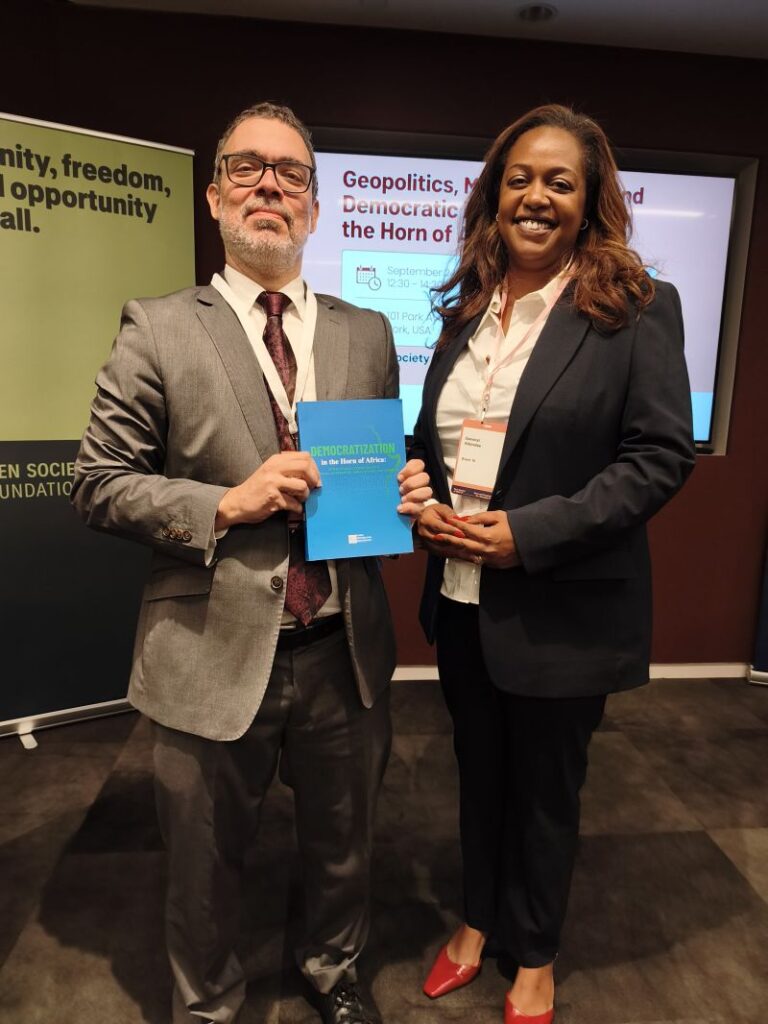
On the occasion, HCD also disseminated 50 copies of its recent publication, Democratization in the Horn of Africa: Structural Constraints, Political Dynamics and Future Prospects, and its accompanying policy brief, Two-Way Traffic: Conflict and Democratization in the Horn of Africa, to key stakeholders attending the event.
Read the publication here: https://horn-center.org/publications/research/