
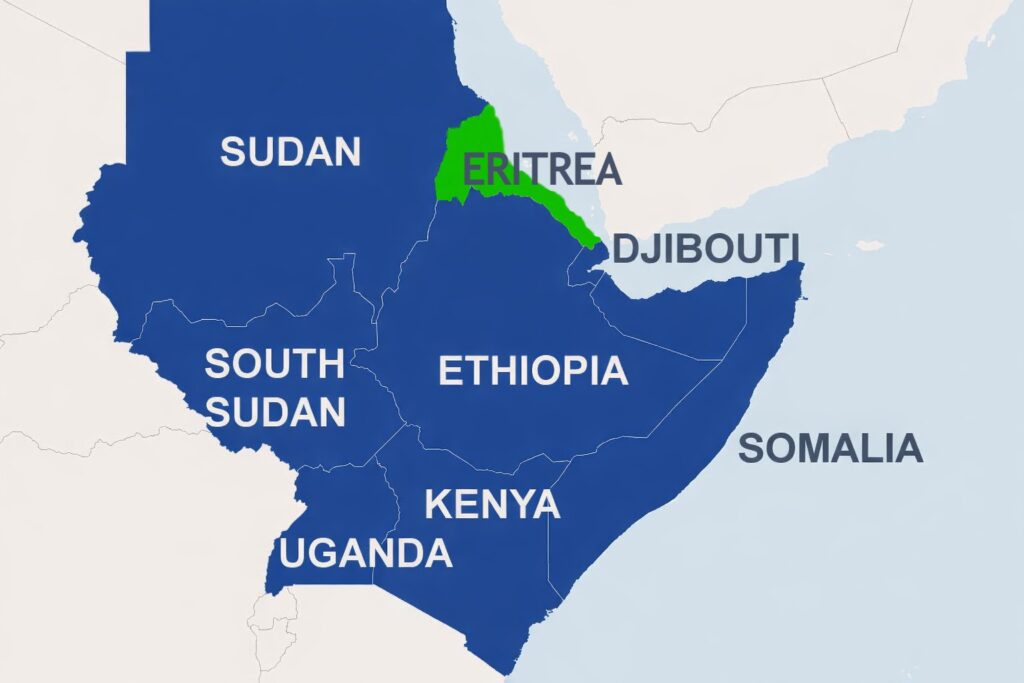
Eritrea’s Withdrawal from the Inter-Governmental Authority for Development: Implications on Bilateral Relations and Multilateral Arrangements
Since gaining its independence in 1993, Eritrea has often been characterized as a state diverging sharply from established norms of global diplomacy and political cooperation. Allegations of its involvement in financing fundamentalist movements in Somalia, unresolved border skirmishes with Ethiopia, persistent internal governance and democracy deficits, and virtually non-existent civic space have positioned Eritrea as a target of international isolation and United Nations Security Council sanctions. These dynamics have profoundly shaped Eritrea’s perception of, and engagement with, international, continental, and regional intergovernmental structures.
...Eritrea has often been characterized as a state diverging sharply from established norms of global diplomacy and political cooperation.
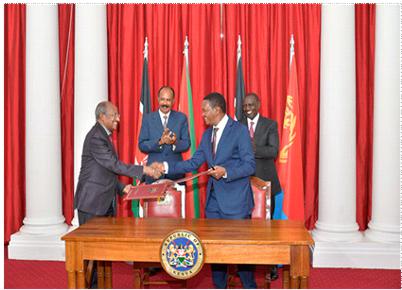
When it comes to its regional engagement, it is to be recalled that Eritrea previously left the Intergovernmental Authority on Development (IGAD) in 2007, amid escalating border disputes with Ethiopia, stating that the organization did not adequately address its concerns and favored Ethiopia’s position, and rejoined in June 2023 after its rapprochement with Ethiopia, and following diplomatic efforts by the Kenyan president William Ruto.
On December 12, 2025, Eritrea formally announced its second withdrawal from IGAD nearly 31 months after rejoining the bloc as tensions with Ethiopia reached new heights. Despite Eritrea’s readmission, its participation remained nominal, as the country did not regularly attend meetings, programs, or activities. For example, at the regional meeting held in July 2025 to establish the IGAD Civil Society Organizations Peace Forum, where HCD was endorsed as a member, we observed that all IGAD member states were present except Sudan and Eritrea. Similarly, at the IGAD Governance Forum in November 2025, where HCD was invited to serve on an expert panel, Eritrea was still not represented. As such, the withdrawal effectively formalized Eritrea’s de facto absence.
...its participation remained nominal, as the country did not regularly attend meetings, programs, or activities.
Eritrea, in its official exit statement, accuses IGAD of “becoming a tool against countries in the Horn, particularly Eritrea,” reiterating its long claim that IGAD is taking the Ethiopian side in regional disputes. This claim of Ethiopia’s hegemony over IGAD might be attributed to the structural gap created by the lack of collective power of all member states in the region. Countries such as Kenya and Uganda have strategic interests and are invested in the East African Community (EAC) instead of IGAD, perhaps due to economic imperatives.
The press release further criticized IGAD for “failing to meet regional aspirations” and continuing “to renege on its statutory obligations, thereby undermining its own relevance and legal mandate. Nonetheless, IGAD played a pertinent role in the cessation of hostilities agreement between the Federal government and the Tigray People’s Liberation Front (TPLF) in Ethiopia, and in mediating the conflict in South Sudan. A critical implication of Eritrea’s exit would be undermining IGAD’s already limited capacity in conflict prevention and resolution in the region.
...Eritrea’s exit would be undermining IGAD’s already limited capacity in conflict prevention and resolution in the region.
In its communiqué published on December 12, 2025, IGAD noted that Eritrea’s decision was made “without submission of tangible complaints,” reflecting unspecified and intangible grievances Eritrea had toward the organization.
This withdrawal occurs at a particularly sensitive juncture marked by escalating tensions between Ethiopia and Eritrea over occupied territories, Ethiopia’s renewed interest in securing sea access, and the growing involvement of Egypt and other foreign powers in the Horn of Africa regional affairs. Therefore, Eritrea’s departure from IGAD has significant political ramifications for the relations with Ethiopia, the wider Horn of Africa, and notions of multilateralism.
It has the potential to eliminate IGAD’s role as a key multilateral platform for diplomatic engagement, thereby closing avenues to address the persistent tension between Ethiopia and Eritrea over disputed territories and, more recently, over access to the Red Sea. This development represents a potential step toward heightened confrontation between the two countries, with indicators pointing to the risk of open conflict.
Eritrea is not the only member state that has expressed discontent with IGAD. Sudan, in the context of its ongoing conflict, and Somalia, particularly regarding the unresolved question of Somaliland’s statehood, have both signaled dissatisfaction with the organization in recent years. Eritrea’s withdrawal may therefore set a precedent, potentially encouraging other IGAD member states with unresolved grievances to reconsider their own membership in the regional organization with an imminent domino effect.
...potentially encouraging other IGAD member states with unresolved grievances to reconsider their own membership in the regional organization with an imminent domino effect.
Given its already limited capacity to shape regional political and diplomatic outcomes, Eritrea’s withdrawal from IGAD further undermines the organization’s aspirations to become a leading regional inter-governmental organization anchoring development, peace, and security, and regional integration. This trend may thus weaken IGAD’s potential to mediate regional peace and security problems, including mediating between warring parties, bringing an end to the violent conflict in Sudan, and averting a relapse of conflict in South Sudan.
The African Union (AU) has identified regional integration as a principal strategy for advancing continental unity in its Agenda 2063. Eritrea’s withdrawal from IGAD, combined with the recent exits of Mali, Niger, and Burkina Faso from ECOWAS in West Africa, poses a significant challenge to the AU’s vision of regional organizations serving as the building blocks of continental unity. These developments highlight the emergence of new patterns of regional integration that favor fluid alliances, less permanent and geographically anchored rather than traditional regional blocs based on permanent arrangements. While some observers view this as a shift toward an ad hoc ‘coalition’ model of cooperation, it is important to note that the Horn of Africa cannot afford the diminishing role of regional multi-lateral avenues such as IGAD. The region is increasingly confronted by new and complex threats to peace and security. With its heavy concentration of foreign arms supplied by multiple states and the rise of transboundary religious fundamentalist movements, any decline in the relevance of multilateral platforms such as IGAD, without viable alternative arrangements for joint action or mediation would expose the region to risks of flaring conflicts.
...combined with the recent exits of Mali, Niger, and Burkina Faso from ECOWAS in West Africa, poses a significant challenge to the AU’s vision of regional organizations serving as the building blocks of continental unity.
Related Content
Geopolitics in Motion: External Interventions in the Horn of Africa and the Escalation of Conflict in Sudan
Geopolitics in Motion: External Interventions in the Horn of Africa (HoA) and the Escalation of Conflict in Sudan The Horn...
Israel’s Recognition of Somaliland as an Independent State: Key Lessons and Regional Implications
Israel’s Recognition of Somaliland as an Independent State: Key Lessons and Regional Implications IntroductionBeyond the wars, conflicts, insecurity, famine, and...
Eritrea’s Withdrawal from the Inter-Governmental Authority for Development: Implications on Bilateral Relations and Multilateral Arrangements
Eritrea’s Withdrawal from the Inter-Governmental Authority for Development: Implications on Bilateral Relations and Multilateral Arrangements Since gaining its independence in...