
Israel’s Recognition of Somaliland as an Independent State: Key Lessons and Regional Implications
Introduction
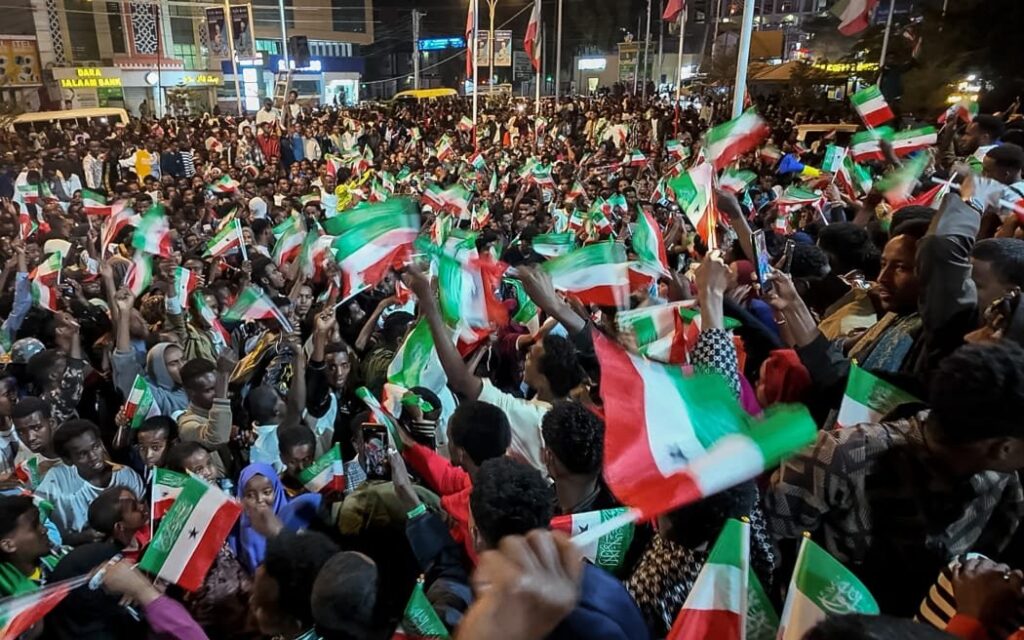
Beyond the wars, conflicts, insecurity, famine, and recurring droughts that have long defined the Horn of Africa, the region is equally notable as the birthplace of the world’s youngest states. The Horn of Africa introduced two new polities to the international system within just four decades: Eritrea in 1991/93 and South Sudan in 2011, and potentially a third, Somaliland, following Israel’s recognition in December 2025, the first such recognition from a UN member state. While simultaneously grappling with numerous other attempts at state formation and secessionist movements, Israel’s recognition highlights the unsettled nature of state-building in the region.
...Israel’s recognition highlights the unsettled nature of state-building in the region.
A closer examination of Africa’s independence timelines reveals that Somaliland predates Somalia as a sovereign entity with clearly defined colonial-era boundaries established through treaties with France (Djibouti, 1888), Ethiopia (1887), and Italy (Somalia, 1894); based on which, Somaliland quest for independence contravenes neither the African Union’s Constitutive Act nor any other international norm on self-determination and state recognition. Citing this “legitimate claim”, Somaliland has been actively seeking recognition from the international community since its de facto secession from the Republic of Somalia in 1991.
Somaliland’s endeavor appears to have borne fruit after more than three decades. However, this recognition has encountered severe opposition from the Republic of Somalia, its allies, and multilateral organizations such as the African Union (AU), Intergovernmental Authority on Development (IGAD), and Organization of Islamic Cooperation (OIC), citing that it is a clear contravention of the sovereignty and territorial integrity of the Republic of Somalia. This reaction underscores the likelihood of emerging alliances and counter-alliances that could further destabilize the region. Hence, given the timing and context, Israel’s formal recognition of Somaliland carries significant geopolitical and security implications, especially given the conflict in Sudan, the communal violence and inter-ethnic tensions in Ethiopia, South Sudan, and Djibouti, and most importantly, the strained Ethio-Eritrea relationship over access to the Red Sea and its potential geopolitical extension to the Gulf and beyond. In this context, Israel’s recognition of Somaliland has reverberated across the Horn of Africa.
This short article analyzes the potential impacts of Israel’s move on the region, Somalia, and Somaliland, as well as the geopolitical realignments, cross-continental security, and implications for regional democratic governance.
...Israel’s formal recognition of Somaliland carries significant geopolitical and security implications.
Geopolitical Realignments
Israel’s recognition of Somaliland marked a decisive break from decades of diplomatic consensus over Somalia’s territorial integrity, simultaneously ending Somaliland’s isolation and reshaping power configurations in the Horn of Africa. This regional realignment was foreshadowed by the Memorandum of Understanding (MoU) signed between Ethiopia and Somaliland on 01 January 2024. The MoU included Ethiopia’s commitment to conduct an in-depth assessment of Somaliland’s recognition in exchange for a naval base, a move with profound geopolitical implications. The agreement provoked sharp opposition from Somalia and potentially presented a serious scenario that undermines Djibouti’s historical role as a strategic hub for foreign military deployments in the Horn.
Observers contend that Ethiopia, by embedding recognition considerations within the MoU, effectively positioned itself as the first UN member state to signal recognition of Somaliland, even if not formally declared. Ethiopia’s actions—maintaining a functioning “consulate” in Hargeisa, pursuing joint ventures to develop the Berbera port with Dubai Ports World, and linking recognition to naval basing rights—were widely interpreted by Somali politicians as systematic advocacy for Somaliland’s independence. Given the historical close ties between Ethiopia and Israel, the recognition strengthened the conspiracy narratives about Ethiopia’s behind-the-scenes role, further straining the already fragile Ethio-Somali relations while intensifying regional rivalries.
...the historical close ties between Ethiopia and Israel, the recognition strengthened the conspiracy narratives about Ethiopia’s behind-the-scenes role.
The recognition reverberates across the Middle East, where states recalibrate their economic and security interests in the Horn of Africa to counter rivals and project influence. Gulf and broader Middle Eastern powers are likely to instrumentalize Somaliland’s recognition as a political opportunity, extending Arab-Israel competition into the Horn. Under Türkiye’s coordination, Arab and Islamic states opposed to the Abraham Accords are expected to reaffirm their support for Somalia’s territorial integrity, while Israel and the United Arab Emirates (UAE), driven by security and commercial interests, respectively, support Somaliland. The United States, viewing Israel as its territorial extension in the Middle East, is expected to align with Israel at least covertly, adding a new layer of complexity through intensified U.S–China competition in the region. This evolving landscape will force countries in the region to align, eroding the Horn of Africa regional identity under formation through IGAD and the East African Community (EAC) coordination.
Ethiopia’s position remains uncertain. Having initially signaled recognition through the MoU, it later reversed course under Türkiye’s diplomatic intervention, reaffirming Somalia’s sovereignty and territorial integrity in the Ankara Declaration. However, Ethiopia may seek new alliances outside established frameworks to safeguard its interests, even deviating from the Ankara declaration, while Kenya and Uganda, guided by Commonwealth ties, are unlikely to oppose Somaliland’s independence outright. Therefore, the region, long characterized by military build-ups, proxy conflicts, and religious fundamentalism, now faces heightened insecurity, undermining the relative stability achieved in Somalia through initiatives such as ATMIS, UNISOM, and the African Union.
The post-recognition order appears to be crystallizing into a tri-polar framework. The first pole—Israel, UAE, USA, and former British colonies either covertly or overtly support Somaliland’s independence. The second pole, the Arab League and OIC states, led by Türkiye and joined by China, stands by Somalia’s territorial integrity. The third pole comprises non-aligned states adopting a cautious “wait-and-see” approach. Collectively, these developments signal a profound transformation in the Horn of Africa’s security architecture and power configuration.
The post-recognition order appears to be crystallizing into a tri-polar framework.

Cross Continental Security Implications
In exchange for formal recognition, Israel is reported to expect three major concessions from Somaliland: first, accession to the Abraham Accords, which would require Somaliland to establish diplomatic relations with Israel, a move widely perceived as a duplicitous act; second, the provision of a military base to support Israeli operations against the Houthis; and third, cooperation in a controversial plan to relocate Palestinians. Collectively, these arrangements would grant Israel significant new geostrategic capabilities in the Horn of Africa and the broader Middle East. The Somaliland-Israel agreement could provide access for the latter to utilize Somaliland’s ground and airspace for both offensive and defensive operations against Houthi forces. Calculating the potential danger, Houthi military spokesman Yahya Sarea declared that attacks on Israel would continue as long as operations in Gaza persisted, while firmly rejecting any Palestinian relocation scheme involving Somaliland.
The Somaliland-Israel agreement could provide access for the latter to utilize Somaliland’s ground and airspace for both offensive and defensive operations against Houthi forces.
Therefore, the implications of a Somaliland–Israel agreement extend far beyond bilateral relations, carrying substantial cross-continental security consequences. Such a partnership would entrench a cycle of strikes and counterstrikes between Israel and the Houthis, posing enduring threats to regional stability in the Horn of Africa and maritime trade along the Red Sea. For Somaliland, the deal risks diplomatic isolation from fellow Islamic states and could draw the attention of the Axis of Resistance, informal military network of Islamic fundamentalist groups and rogue states in the Middel East that claimed the guardian of Islamic States, which increasingly views Somaliland as an Israeli ally in the Horn of Africa, potentially opening a new military and terrorism frontier in the region.
Somaliland’s recognition thus creates a security nexus linking Africa and Asia, with the impact extending across the broader Asia–Africa axis. The impact touches Palestinians, Israelis, Somalis, and Yemenis, involving states and non-state fundamentalist actors aligned through their Axis of Resistance. Though Israel’s access to Somaliland offers leverage for counterstrikes against Houthi positions in Yemen, it raises the prospect of escalating tensions in a new conflict arena. This expansion of hostilities could strain Israel’s military capacity, which is already stretched across multiple fronts, including Gaza, Lebanon, Syria, Yemen, and now Somaliland, which would create a security vacuum in the Middle East that terrorists could exploit.
Somaliland’s recognition thus creates a security nexus linking Africa and Asia, with the impact extending across the broader Asia–Africa axis.
Security Deterioration and Democratic Regression

Democratic governance, security, and effective administration have emerged as critical instruments for securing de facto and/or de jure international recognition by way of incentivizing diplomatic and economic relations with existing states and entities. In Somalia and Somaliland, widening disparities in governance and security over several decades have created a deep divide between the two entities. Somalia’s inability to establish an inclusive political framework and equitably allocate resources among its diverse sub-national constituencies, including Somaliland, compelled the latter to withdraw from the union and pursue a political path aimed at reclaiming its sovereignty.
Somaliland has long stood out as a notable oasis of stability in a region generally characterized by conflict and instability. The self-declared independent state successfully safeguarded its borders and mainland territories against terrorist threats, offering a valuable lesson for neighboring countries in the Horn of Africa that have endured repeated attacks by al-Shabaab. Somaliland consistently leverages its relative stability and democratic credentials as evidence of governance strength in its quest for recognition. Since 2003, the territory has conducted multiple peaceful elections, observed by delegations from the United States, France, the United Kingdom, and the European Union. Notably, its 2024 electoral contest was one of only five in Africa to result in the peaceful transfer of power to an opposition party. With comparatively greater media freedom and competitive political elections that have even unseated incumbent governments, Somaliland emerged as a model of democratic governance, earning relatively favorable ratings from Freedom House and other international indices. These achievements underscore the central role of democratic governance not only in mitigating secessionist pressures but also in serving as a powerful incentive for at least de facto international recognition.
...its 2024 electoral contest was one of only five in Africa to result in the peaceful transfer of power to an opposition party.

Currently, Somaliland has territorial disputes, first with Puntland and more recently with the newly established Khatumo or North-Eastern state. A portion of Khatumo lies within Somaliland’s colonial boundaries but is currently administered as a sub-national entity of Somalia. In addition, parts of Somaliland’s eastern territories, particularly the Awdal District in Boroma province, host communities advocating for integration into the Federal Republic of Somalia. The likelihood of Somaliland pursuing military incursions to reclaim its colonial boundaries, particularly in the contested eastern areas, further heightens the risk of instability. Israel’s recognition is likely to intensify these disputes, emboldening irredentist movements and escalating border tensions. In response, Somaliland may resort to military force and heavy-handed measures to suppress dissent in Awdal District.
Somalia, in turn, may provide military support to irredentist groups within Somaliland, exacerbating internal insecurity. The geopolitical dimension adds further complexity as China, influenced by the Taiwan factor, is expected to align with Somalia, Awdal District, and Khatumo State, thereby deepening external involvement in the Horn of Africa’s fragile security environment. Meanwhile, al-Shabaab, as a largely Somali nationalist group with an agenda of promoting a unified Somalia and largely dormant in Somaliland in recent years, could seize upon these developments as a new political opportunity, mobilizing support and striking targets within Somaliland.
The geopolitical dimension adds further complexity as China, influenced by the Taiwan factor, is expected to align with Somalia, Awdal District, and Khatumo State.
These dynamics suggest that Somaliland’s hard-won progress in democratic governance and stability is at risk of stalling, with weakened human rights protections and the potential for significant regression into insecurity and authoritarian practices.
In conclusion, when challenges arise, it is imperative that the African Union (AU) and IGAD refrain from assigning blame or taking sides. Instead, their efforts would be more constructive if directed toward fostering dialogue between the political leaders of Somalia and Somaliland. Equally, a moral responsibility lies with other states that engage in Somalia–Somaliland relations through alliances and counter-alliances, which further exacerbate tensions in the Horn of Africa and have cross-continental repercussions in the Middle East and Gulf. Moreover, the pursuit of recognition at any cost risks eroding Somaliland’s hard-won progress in governance, democracy, and security, achievements that must be sustained and maintained.
Related Content
Geopolitics in Motion: External Interventions in the Horn of Africa and the Escalation of Conflict in Sudan
Geopolitics in Motion: External Interventions in the Horn of Africa (HoA) and the Escalation of Conflict in Sudan The Horn...
Israel’s Recognition of Somaliland as an Independent State: Key Lessons and Regional Implications
Israel’s Recognition of Somaliland as an Independent State: Key Lessons and Regional Implications IntroductionBeyond the wars, conflicts, insecurity, famine, and...
Eritrea’s Withdrawal from the Inter-Governmental Authority for Development: Implications on Bilateral Relations and Multilateral Arrangements
Eritrea’s Withdrawal from the Inter-Governmental Authority for Development: Implications on Bilateral Relations and Multilateral Arrangements Since gaining its independence in...